

Authorship, review and evidence boundary
- Technical review
- East Baoyu Product & Quality Review Desk
- Reviewed
- 2026-07-23
- Scope
- General engineering and procurement guidance. This article is not a project design, geotechnical report, certificate, warranty, code interpretation or contract requirement.
Evidence basis: Official ISO quality and welding standards pages plus established manufacturing-quality, traceability, document-control and buyer acceptance principles.
Read the Editorial PolicyShort answer: project acceptance depends on an agreed manufacturing data record (MDR) index created before production. The dossier should connect the final delivered items to approved requirements, material identity, fabrication procedures, inspection and test results, deviations, coating, packing and release. Completeness is demonstrated by traceability and closed status—not by the number of PDF pages.
This buyer checklist shows how to define, review and hand over an MDR for solar mounting, ground screws and structural steel. The exact records remain contract- and product-specific, but the control principles apply from enquiry through final release.
Set the acceptance boundary in the contract
List required deliverables, language, format, numbering, review code, submission timing, retention and confidentiality in the enquiry or purchase specification. Identify which calculations, drawings, certificates, inspection plans, procedures, tests, as-built records and packing documents are included. If a record has commercial or schedule impact, agree it before order.
Define acceptance authorities. The design authority approves the engineering basis; manufacturing quality releases production activities; the buyer or appointed inspector reviews contract points; local authorities or certification bodies may have separate roles. A document marked “reviewed” should not accidentally transfer design responsibility.
Distinguish product acceptance, shipment release and site acceptance. Goods can meet factory inspection but arrive damaged; site installation can introduce new evidence and deviations. The handover architecture should connect these stages without treating one signature as approval of everything.
Use a controlled MDR index
| MDR section | Core question answered | Typical records | Traceability key |
|---|---|---|---|
| Design and scope | What was approved for supply? | Design basis, calculations, drawings, BOM, interface schedule and revision register. | Product/assembly and drawing revision. |
| Materials | Which certified materials became the goods? | MTCs, receiving inspection, cutting/heat maps and consumable records. | Heat, batch, coil, plate or lot to item. |
| Fabrication | Which controlled processes were used? | WPS/PQR, qualifications, weld maps, NDT and dimensional inspection. | Seam, welder, item and production lot. |
| Protection | How was corrosion protection applied and verified? | Surface preparation, galvanizing/paint batch, thickness and repair reports. | Component or coating batch. |
| Deviations | What differed and who accepted it? | NCRs, concessions, repairs, corrective action and closure. | Affected serial, item or lot. |
| Release/logistics | What shipped, where and in what condition? | Final release, packing lists, photos, weights, labels and shipment records. | Item to pack and pack to shipment. |
Control design documents and revisions
The dossier should identify the governing design basis, loads and interfaces, approved calculations where in scope, drawings, bills of material and technical queries. Include a document register with revision, status and approval date. Superseded files may be retained for history but must not be confused with final release documents.
Close design comments and show how changes affected materials, manufacture, tests and installed interfaces. If a late change applies only to certain batches, the record should identify the transition point. A final “as-built” drawing should reflect approved deviations, not merely repeat the tender geometry.
For supplier-designed products, state the boundary between generic product data and project-specific engineering. Catalogue tables support selection, but the controlled calculation and drawing should state the actual configuration and assumptions.
Prove material-to-item traceability
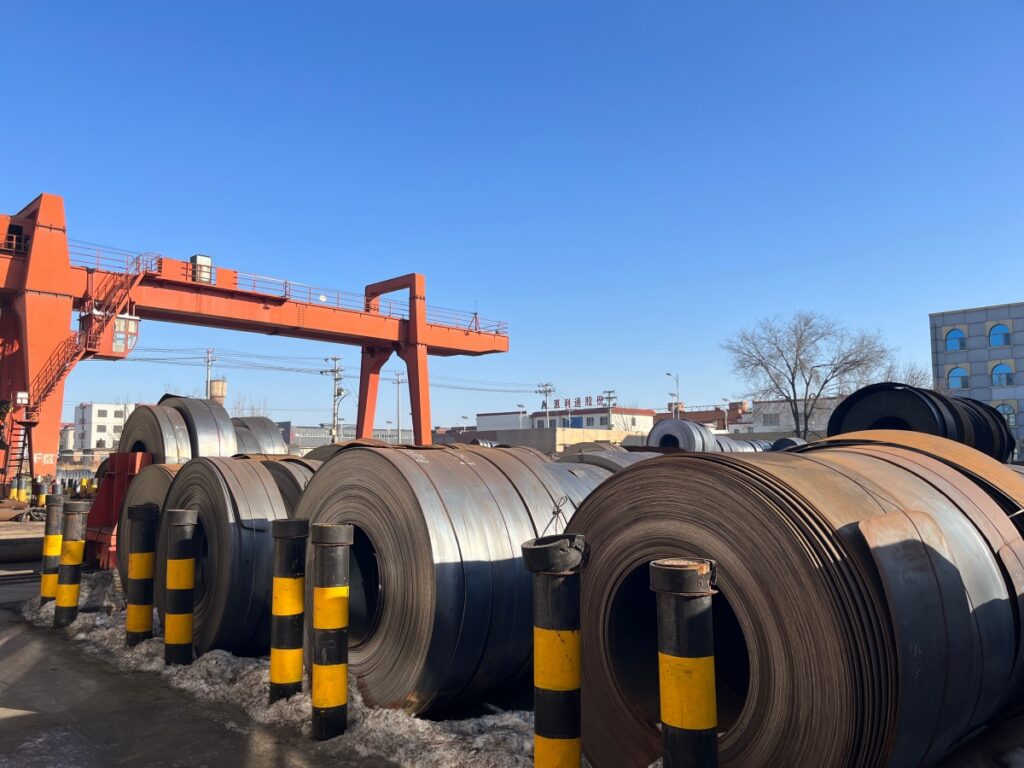
Material certificates should identify the manufacturer, standard, grade, dimensions, heat or batch and required chemical/mechanical results. The receiving record confirms the stock received matches the certificate and purchase requirement. Cutting maps, transferred marks or digital records then link that stock to parts and assemblies.
Set the traceability level based on consequence and contract: individual, batch, assembly or production lot. Keep the level practical and auditable. A certificate file named “steel.pdf” does not establish which pile, post or beam it covers.
Include controlled substitutions. An equivalent grade is not automatically interchangeable if thickness, weldability, toughness, coating response or local approval changes. Preserve the technical assessment and authority with the affected item list.
Connect process qualification to production
For welding, compile applicable WPSs, supporting qualification records, welder/operator qualifications, consumable controls, production maps, visual inspection and NDT. The file should show that the qualification range covered the actual material, thickness, process, joint and position.
For forming, machining, bolting, galvanizing, painting or special processes, include approved procedures and critical controls required by the specification. Calibration and verification records should cover instruments that produced acceptance data during the relevant period.
Do not overload the dossier with unrelated company procedures. Provide the approved project revisions and the records that demonstrate their application. The guide to a steel fabrication ITP explains how the evidence is generated.
Retain actual inspection and test results
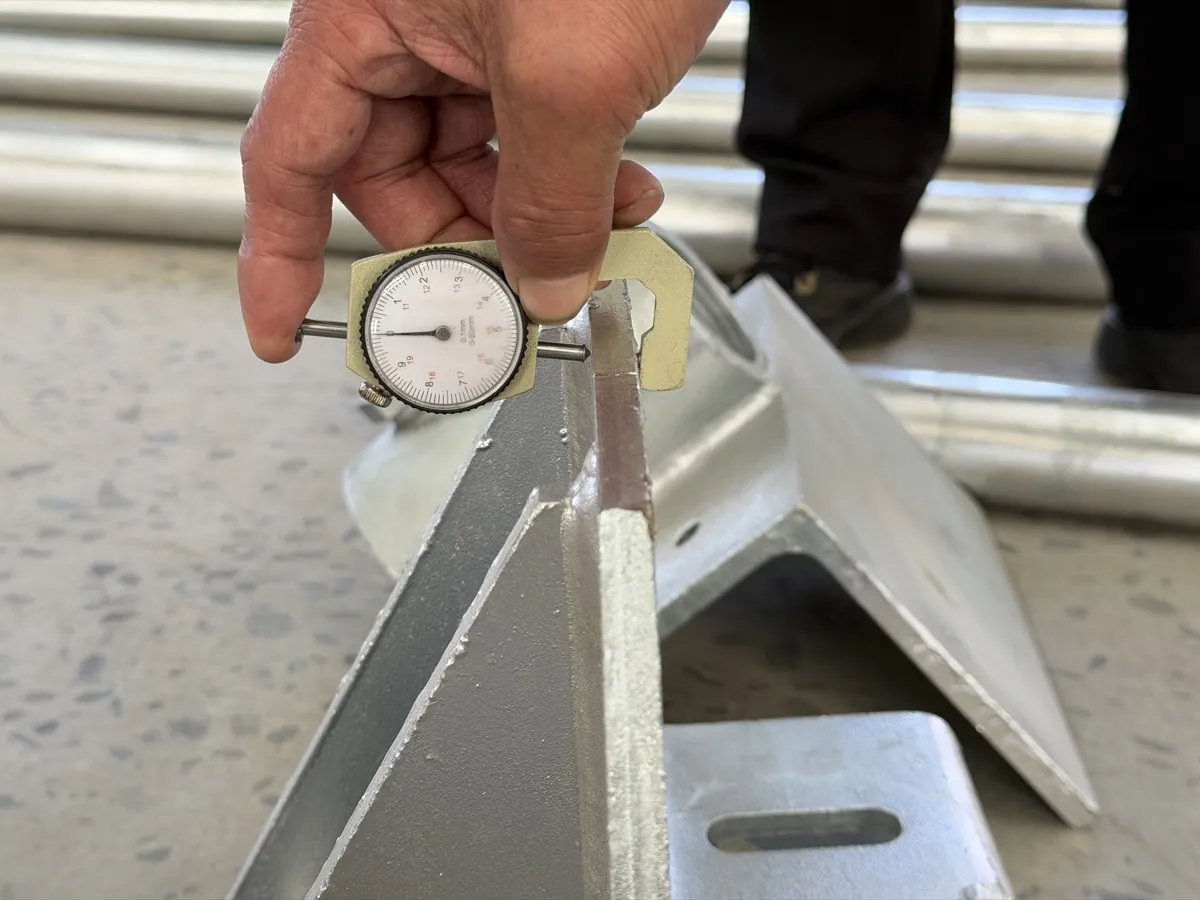
Inspection reports should state item or lot, drawing/specification revision, characteristic, method, instrument, actual value or observation, acceptance criterion, inspector, date and status. Critical dimensions are more useful as measured values than a page of unchecked “pass” boxes.
Test reports should preserve specimen/configuration, setup, calibration, load steps or operating conditions, raw observations, calculation and acceptance. Photographs should identify the test and orientation. If a test is invalid or repeated, retain both the original status and the approved repeat route.
Where sampling is used, define the population and selection. Include expansion records after rejects. A passing sample does not erase a prior failure; the dossier should show containment, investigation, additional inspection and closure.
Make nonconformance transparent
| NCR element | Minimum content | Buyer review question | Closure evidence |
|---|---|---|---|
| Identification | Affected item/lot, requirement and actual condition. | Is the full population contained? | Marked status and location list. |
| Disposition | Rework, repair, use-as-is or scrap with technical basis. | Does the signatory have design/contract authority? | Approved disposition and revised documents. |
| Implementation | Method, responsible person and completion. | Were new risks or concealed work controlled? | Repair/rework record and photographs. |
| Verification | Repeat inspection/test and final status. | Does the result meet the approved disposition? | Signed closure linked to item. |
| Prevention | Cause and corrective action where required. | Could the issue affect other lots? | Effectiveness review or expanded inspection. |
An MDR with no nonconformance records is not automatically better. It may indicate excellent control, but it can also indicate that deviations were handled informally. Review inspection results, repairs and production history for consistency.
Verify coating, packing and shipment
Compile surface preparation, environmental condition, material batch, thickness, appearance, repair and final coating release records appropriate to the system. Link coating batches or reports to component groups. Include post-coating dimensional/fit checks where threads, holes or interfaces can be affected.
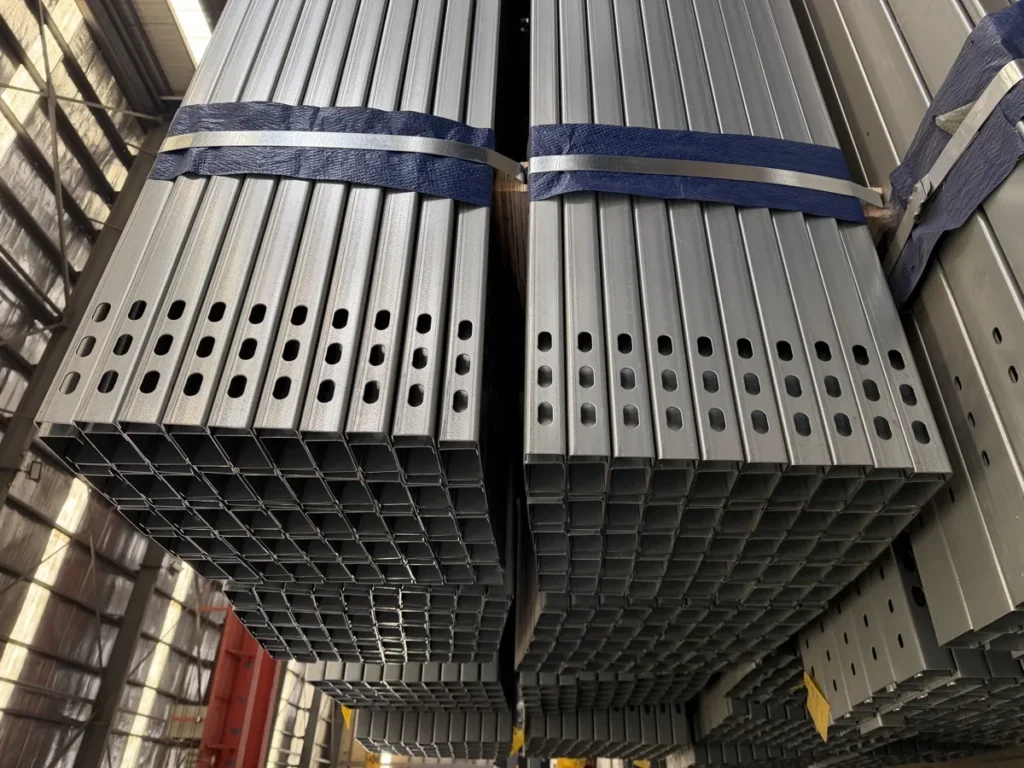
Packing records should connect items to unique pack IDs, weights, dimensions, lifting points and shipment references. Preserve pre-pack condition and container/loading photographs as required. The guide to export packing for solar and steel components lists the logistics controls.
At receipt, add damage, shortage, preservation and site-release records to the project dossier. Factory release should remain distinct from transport and installation acceptance so responsibility and corrective action are clear.
Run progressive reviews, not one final document dump
Agree submission milestones: design release, preproduction, first article, regular manufacturing batches, pre-shipment and final handover. Review document status alongside physical progress. Missing heat mapping discovered after coating is harder to recover than a missing filename.
Use an MDR register with required, submitted, reviewed, rejected and approved status plus comment owner and due date. Track both document completeness and technical acceptability. A file can be present but unusable because it lacks item identity, revision or signature.
Before shipment, sample traceability in both directions: choose delivered items and trace back to drawing, material and inspection; choose certificate heats or inspection lots and trace forward to goods. Verify that open comments and NCRs do not affect release.
Deliver a usable digital handover
Provide a searchable, bookmarked package with consistent filenames and an index. Avoid scans where native digital records are available. State final version, issue date, confidentiality, retention and correction route. Large raw files may use a controlled repository, but the index should remain accessible and links should not expire without a migration plan.
Separate buyer-approved, manufacturer-certified, third-party-witnessed and information-only records. Do not label a generic certificate or marketing brochure as project-specific evidence. The public Evidence Center explains the site’s evidence classifications; the project MDR provides the controlled delivery evidence.
Final buyer acceptance checklist
- Contract MDR index, revisions and final completeness status.
- Approved design documents and closed technical queries.
- Material certificates linked to actual items or lots.
- Applicable procedures, qualifications and personnel records.
- Inspection, NDT, dimensional, test and coating results.
- Closed NCRs, concessions, repairs and corrective action.
- Calibration/verification status for acceptance instruments.
- Final item list, markings, packing and shipment traceability.
- As-built, operation, maintenance and retention information where required.
- Signed release with listed exceptions—not a blanket approval.
Frequently asked questions
When should the MDR index be agreed?
Before production, ideally during tender or contract review. Late requirements can be impossible to reconstruct and can create cost or schedule disputes.
Does buyer document review transfer design responsibility?
Not unless the contract expressly says so. Review codes and responsibilities should be defined; the submitting organisation retains its stated obligations.
Can one certificate cover many items?
Yes, if the traceability system clearly defines the covered production lot and links it to all affected goods. The certificate alone is insufficient without that link.
Should every photograph be included?
No. Include required and useful photographs identified by item, stage and date. Curated traceable evidence is more useful than thousands of unlabelled images.
What if the final dossier has missing records?
Classify the gap, assess product and contractual risk, recover evidence where legitimate, and issue an approved exception or corrective action. Never fabricate retrospective records.
Agree the dossier before manufacturing starts
Use the Evidence Center to understand available controlled records and submit the project MDR index, drawings and inspection requirements for contract-stage review.
Manufacturing data handover table
| Decision area | Inputs to confirm | Verification output |
|---|---|---|
| Identity | Contract, item, drawing revision, heat/batch and quantity | Material and production traceability register |
| Conformity | Inspection point, method, acceptance criterion and result | Signed ITP, inspection and test records |
| Release | Exceptions, concessions, packing status and document index | Approved manufacturing data record package |
Use this table as an enquiry and review checklist. Project design, acceptance criteria and released records remain project-specific.
References, disclosure and change record
References and further verification
- ISO 9001 Quality management systems
- ISO 3834-1:2021 Quality requirements for fusion welding
- East Baoyu Evidence Center
- East Baoyu Editorial Policy
Disclosure: East Baoyu manufactures and supplies products discussed on this website. Structured drafting tools may assist research and editing, but technical claims, project inputs and release decisions require human review.
Version 2.0: Rebuilt with MDR architecture and NCR tables, design/material/process/test/coating/logistics controls, progressive review and digital handover, final buyer checklist, FAQs and reviewed visuals.
View the public Content Change Log · Corrections: info@baolaipipes.com