

Authorship, review and evidence boundary
- Technical review
- East Baoyu Product & Quality Review Desk
- Reviewed
- 2026-07-23
- Scope
- General engineering and procurement guidance. This article is not a project design, geotechnical report, certificate, warranty, code interpretation or contract requirement.
Evidence basis: Official CTU Code guidance plus established packaging, cargo-securing, corrosion-preservation and project logistics principles. Carrier and destination rules remain project-specific.
Read the Editorial PolicyShort answer: export packing for solar mounting and steel components should be engineered from the complete transport chain. Define the goods, route, handling equipment, container or breakbulk limits, corrosion exposure, storage duration and receiving method; then design bundles, crates, restraints, moisture protection, labels and packing records so components arrive identifiable, undamaged and safe to unload.
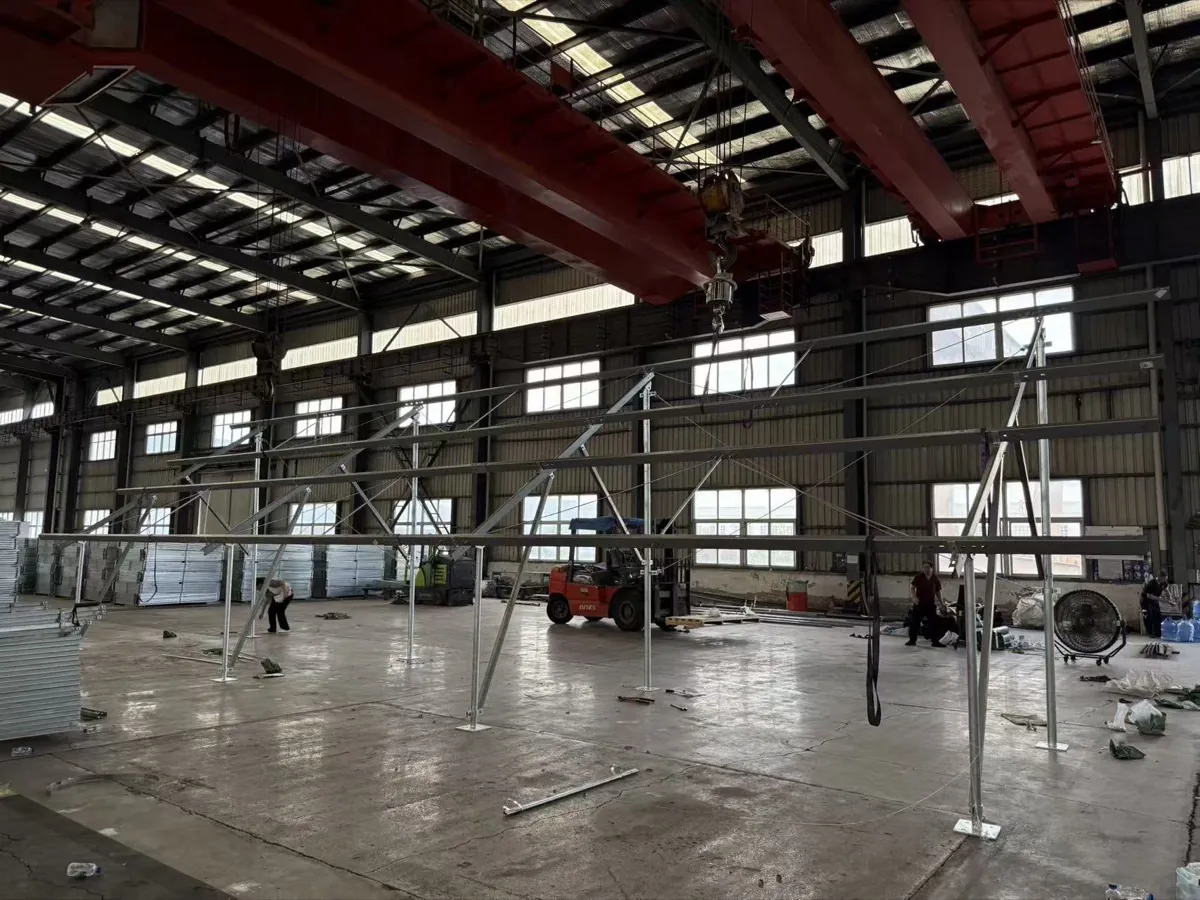
Packing is part of product quality and transport safety, not an activity left until the truck arrives. Long, heavy, nested and coated steel needs a documented plan that links fabrication release to shipment unit and final site location.
Start with a transport-chain risk assessment
Map every transfer: factory crane or forklift, road haulage, consolidation yard, port handling, ocean movement, customs inspection, destination haulage, site storage and final distribution. Record lifting and support points, maximum unit weight and dimensions, equipment availability, route restrictions, weather exposure and expected duration.
Containerised cargo experiences braking, cornering, vibration, vessel motion, humidity cycles and repeated handling. Breakbulk cargo adds exposure and lifting risk. An inland project may require several re-handlings after port arrival. Design for the most demanding credible leg, not only the factory-to-port truck.
Identify consequences: personal injury from an unstable bundle, structural damage from inadequate support, coating abrasion, water staining, mixed items, missing fasteners, customs delay or unloading equipment that cannot handle the pack. Assign controls and retained evidence for each significant risk.
| Hazard | Design control | Inspection | Receiving instruction |
|---|---|---|---|
| Bundle movement | Rated bands/restraints, blocking and friction appropriate to the route. | Pattern, tension, edge protection and container securing. | Release restraints only in a controlled, stable area. |
| Bending/distortion | Support spacing, stiffeners and stacking limits. | Pack geometry and member condition. | Lift from marked points; do not drag or single-point lift. |
| Coating damage | Non-abrasive separators, sleeves and protected contact points. | Pre-pack coating check and final photographs. | Use padded slings/forks and quarantine damage. |
| Moisture/corrosion | Dry goods, ventilation or sealed barrier/desiccant based on route. | Moisture indicators, wrap condition and container dryness. | Open/vent/store per preservation instruction. |
| Identification loss | Durable internal and external labels plus packing-list linkage. | Scan/check pack IDs and item quantities. | Receive by pack ID and preserve part marks. |
Freeze the shipping-unit strategy early
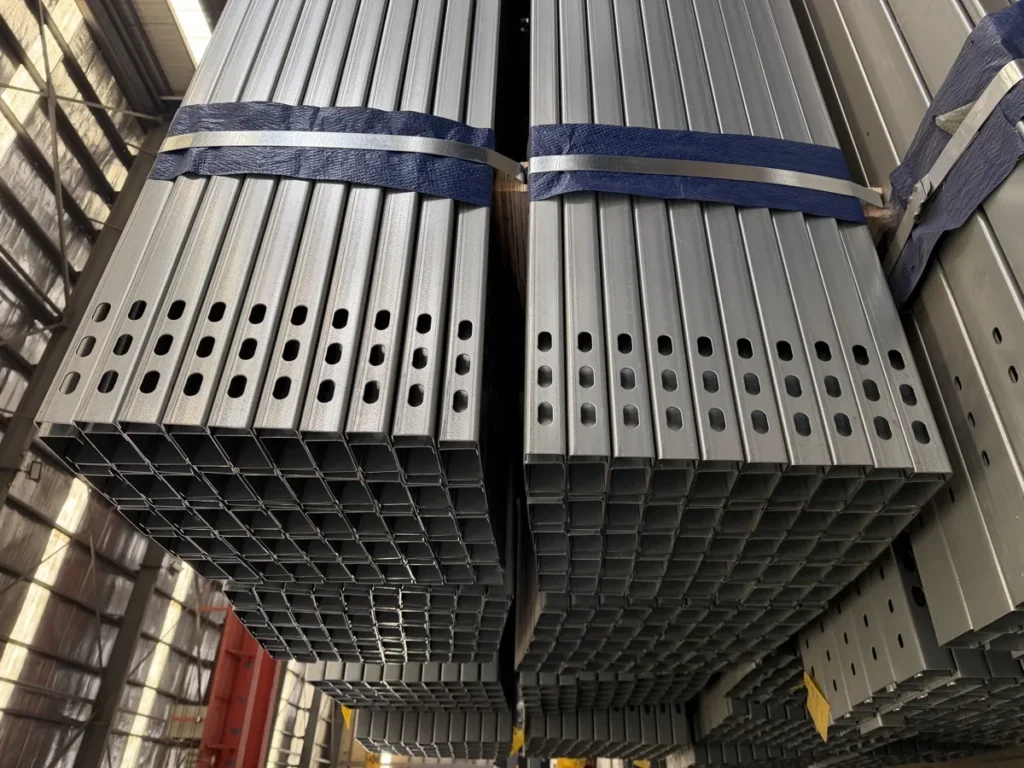
Group parts by erection sequence, destination zone, product family and handling compatibility. A container filled for maximum theoretical density can create site delays if crews must unpack everything to find the first work front. Agree whether the priority is container utilisation, direct-to-row delivery, customs inspection or staged construction.
Set maximum bundle or crate dimensions and gross mass from real forklifts, cranes, spreader bars, container doors, road limits and site access. Include the packaging tare. Long flexible members may require multiple support points or lifting beams. Check centre of gravity and mark it where it is not obvious.
Design returnable racks only when reverse logistics, inspection and ownership are practical. Otherwise, provide disposal or recycling information for timber, steel, plastics and desiccants according to destination rules.
Protect structural geometry
Use bearers and spacers at locations that will not locally buckle, twist or permanently bend members. Align supports through stacked layers so load paths do not concentrate on unsupported flanges or thin walls. Secure nested profiles against fretting and telescoping movement.
Protect machined faces, threads, studs, slotted interfaces, cable features and adjustment mechanisms. Use caps, sleeves or dedicated fixtures that do not trap harmful moisture. Keep loose bolts and small parts in sealed, counted, labelled packages linked to the parent assembly.
For frames or preassemblies, check transport load cases and temporary bracing. A member stable in the completed structure may be flexible during lifting. Identify braces that must remain until a specified erection stage and make removal instructions visible.
Preserve coatings without trapping moisture
Inspect coating before packing and close repairs. Use compatible separators and edge protection; bare steel banding against finished surfaces can cut coatings. Prevent coated parts rubbing during vibration. Avoid contaminated timber or wet dunnage in contact with steel.
Choose a moisture strategy for the route. Open ventilated bundles can let condensation drain from durable galvanized components, while sensitive items may need a sealed barrier, desiccant and humidity indicator. Partially sealed plastic can be worse than either approach if it admits moisture and prevents drying.
Consider container rain: warm humid air can condense on a cooler roof and drip onto cargo. Goods should enter dry, container floors should be inspected, and protection should allow for voyage and storage duration. State shelf life and re-preservation triggers if delivery or installation is delayed.
Use compliant timber and packaging materials
Where timber packaging is used in international trade, confirm destination phytosanitary requirements and obtain compliant marked material from an approved source. Do not assume processed wood, pallets or dunnage are treated identically in every jurisdiction. Keep supporting records where the contract or customs route requires them.
Select timber section and fasteners for crate weight, span, stacking and handling. Nails or screws should not protrude into components. Plywood, composite blocks, foam, plastic wrap and corrosion inhibitors should be compatible with coatings and destination waste controls.
Engineer container loading and cargo securing
Confirm container type, internal dimensions, door opening, floor rating, payload and permissible concentrated loads with the carrier. Distribute weight appropriately and keep the centre of gravity controlled. Heavy cargo should not rely on doors for restraint. Use blocking, bracing, lashings and friction controls designed for anticipated transport accelerations.
Securing points and materials need adequate capacity and suitable angles. Protect lashings from sharp steel edges. Do not improvise structural welds to a container or cargo without authority. After loading, record pack positions, securing arrangement, seal number and gross mass under the applicable shipping process.
The IMO/ILO/UNECE Code of Practice for Packing of Cargo Transport Units provides international guidance for safe packing and securing. The competent logistics and shipping parties must still apply carrier, route and legal requirements to the actual load.
| Release stage | Checks | Record | Status link |
|---|---|---|---|
| Product release | Correct revision, quantity, dimensions, coating and NCR closure. | Final inspection/release report. | Item or batch ID. |
| Pack assembly | Supports, separators, small parts, protection and labels. | Packing checklist and photos. | Pack ID to item list. |
| Weight/dimensions | Gross/net mass, centre of gravity and lifting points. | Pack data sheet. | Pack ID to shipping document. |
| Container loading | Distribution, blocking, securing, moisture control and doors. | Loading diagram/photos and seal. | Pack IDs to container. |
| Shipment release | Document match, dangerous goods if any, customs and carrier acceptance. | Packing list and release note. | Container/booking reference. |
Make labels useful after months in transit
Use a durable unique pack ID, purchase order/project, destination, product or assembly group, piece count, gross/net weight, dimensions, centre of gravity, lifting points, orientation, stacking limit and preservation warnings as applicable. Apply labels on more than one visible face and protect them from abrasion and weather.
Do not expose confidential commercial information unnecessarily, but give receiving teams enough data to handle safely. Add machine-readable codes only if the system remains usable offline and the human-readable ID is still present. A QR code that points to an inaccessible portal is not a sufficient shipping mark.
Link every pack to a controlled packing list showing part numbers, descriptions, revisions and quantities. Record split shipments, shortages and approved substitutions. The item mark on the component should remain legible after the outer pack is removed.
Prepare the receiving and storage method
Send unloading requirements before vessel or truck arrival. State equipment capacity, fork pockets, sling positions, spreader needs, sequence, exclusion zones and which braces or bands must not be removed. The receiving team should compare pack identity, condition and seals with shipment records before dispersing cargo.
Photograph damage before unpacking, quarantine affected packs and issue a report linked to IDs. Do not discard damaged packaging until the cause and claim evidence are preserved. Inspect concealed contact areas and coating where movement is suspected.
Define storage surface, drainage, ventilation, stacking, cover, periodic inspection and maximum unopened duration. Raised supports should align with pack bearers. Open sealed preservation systems under the specified conditions and renew protection if installation is delayed.
Export packing enquiry checklist
- Product drawings, quantities, individual masses and sensitive interfaces.
- Destination, route, mode, expected duration and customs requirements.
- Container/breakbulk choice, payload and handling limits.
- Site unloading equipment, laydown conditions and erection sequence.
- Coating system, acceptable contact materials and preservation period.
- Maximum pack mass/dimensions and stacking requirements.
- Label, document, photograph and traceability requirements.
- Applicable cargo-securing, timber and carrier rules.
Frequently asked questions
Is stretch wrap enough for sea freight?
Not as a universal rule. Protection must match the product, route, condensation risk and storage. Partial wrapping can trap moisture and accelerate staining or corrosion.
Can coated steel be bundled with steel bands?
Only with a controlled design that prevents cutting and abrasion, typically using compatible sleeves or edge protection and suitable tension. Inspect contact areas.
Who is responsible for container securing?
Responsibilities depend on the contract and shipping chain, but the packing party must provide accurate cargo information and a competent securing plan. Carrier and legal requirements also apply.
Should packing be organised by product type or erection sequence?
Often both are relevant. Agree the site logistics priority early; use pack IDs and lists that let the receiver locate the right work-front materials.
What evidence should the buyer receive?
Controlled packing lists, pack data, pre-pack/final photos, weight and dimensions, container/loading records, seal number, timber compliance where applicable and shipment release.
Design the shipping unit with the product
Use the project enquiry route to provide the destination, transport mode, unloading limits and preservation period. Available controlled documents can be identified through the Downloads Center and project data schedule.
Export packing control table
| Decision area | Inputs to confirm | Verification output |
|---|---|---|
| Cargo definition | Component size, weight, finish, lifting points and bundle limits | Approved packing list and marked drawing |
| Protection | Edge protection, separators, moisture control and corrosion-sensitive surfaces | Packing method statement and inspection photos |
| Release | Marking, quantity, container plan and document match | Final packing and shipment release record |
Use this table as an enquiry and review checklist. Project design, acceptance criteria and released records remain project-specific.
References, disclosure and change record
References and further verification
- IMO/ILO/UNECE Code of Practice for Packing of Cargo Transport Units
- East Baoyu Downloads Center
- East Baoyu Evidence Center
Disclosure: East Baoyu manufactures and supplies products discussed on this website. Structured drafting tools may assist research and editing, but technical claims, project inputs and release decisions require human review.
Version 2.0: Rebuilt with risk and release tables, shipping-unit design, geometry/moisture/timber/container controls, durable marking, receiving/storage, enquiry checklist, FAQs and factory/logistics visuals.
View the public Content Change Log · Corrections: info@baolaipipes.com