

Authorship, review and evidence boundary
- Technical review
- East Baoyu Product & Quality Review Desk
- Reviewed
- 2026-07-23
- Scope
- General engineering and procurement guidance. This article is not a project design, geotechnical report, certificate, warranty, code interpretation or contract requirement.
Evidence basis: Cited helical-system acceptance guidance plus established load-test, measurement and construction quality principles. No universal torque factor or capacity is provided.
Read the Editorial PolicyShort answer: installation torque is not ground screw capacity. It is a measured construction response that may be correlated with axial resistance for a defined pile geometry, installation method and ground profile. The correlation must be established and checked by project-specific tests, then used inside a controlled acceptance plan that also considers depth, inclination, structural limits, load direction and site variability.
This distinction matters because a single final torque value can look precise while hiding uncertainty. A defensible process records how the value was measured, where it occurred, what pile and equipment produced it, and which test evidence supports its use.
Torque, resistance and capacity are different records
| Record | What it describes | What it can support | What it cannot prove alone |
|---|---|---|---|
| Installation torque | Rotational resistance measured by the installation system at a stated depth and setup. | Repeatability, changes between layers and a project correlation where justified. | Universal compression, tension, lateral or moment capacity. |
| Installation depth | Final toe or reference level and response history along penetration. | Whether the intended zone was reached and whether the log matches the ground model. | Adequate resistance if the layer or pile condition is unverified. |
| Load-test response | Applied load and measured movement under an approved test method. | Performance of the tested configuration and evidence for design or production verification. | Every pile on a variable site without a sampling and zoning basis. |
| Design capacity | Approved structural and geotechnical resistance after factors and limit-state checks. | Foundation release against stated loads and criteria. | Installation acceptance unless the field control route is also defined. |

Why torque may relate to axial resistance
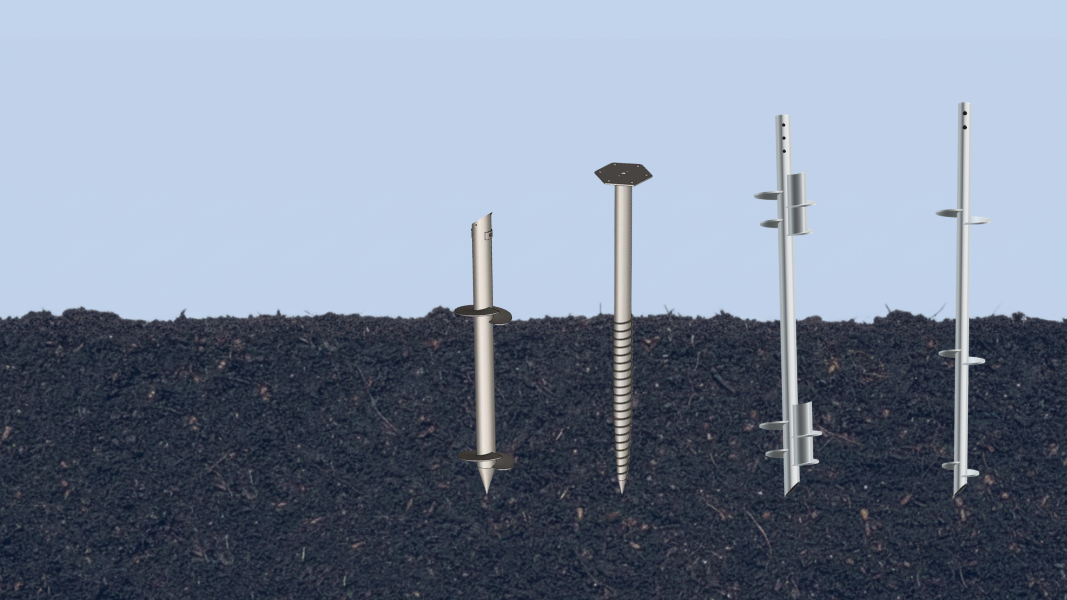
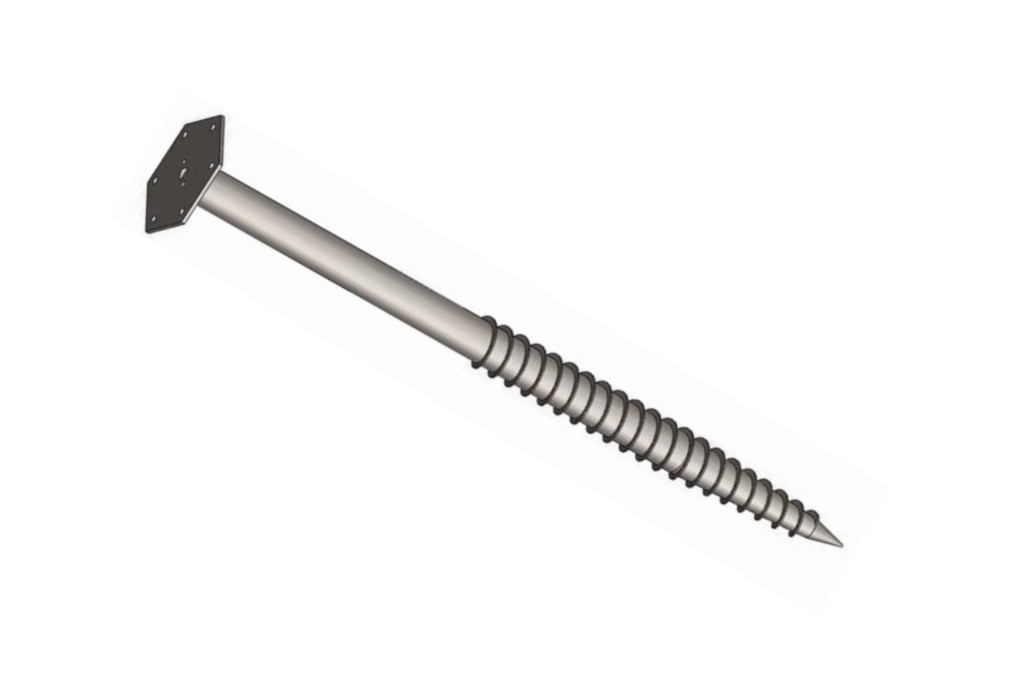
Rotating a helical element through soil requires energy to overcome shearing, displacement and friction. The same geometry interacts with the ground when it resists axial load, so an empirical relationship can exist. However, the relationship is influenced by helix diameter and spacing, shaft geometry, penetration per revolution, soil type, disturbance, installation rate and the way the equipment reports torque.
A relationship developed for one product or site should not be copied automatically to another. Changing the helix, shaft, toe, rig, tooling or operator method may change the measured response. Mixed fill, gravel, cemented layers and obstructions can create peaks that do not represent a continuous competent bearing zone. Very soft layers can also give low readings even when a deeper layer is suitable.
Compression and tension do not necessarily mobilise the ground in the same way. Lateral resistance and moment behaviour depend strongly on near-surface ground, shaft stiffness, projection and connection fixity. A torque criterion focused on axial behaviour does not close those separate checks.
Define a measurement system before using the number
The project procedure should identify the sensor or calculation route, range, accuracy, calibration status, sampling frequency, display and stored data. If hydraulic pressure is converted to torque, document the equipment-specific conversion and relevant configuration. Confirm whether the logged value is instantaneous, averaged, filtered or a peak.
Record equipment and tooling identity because extensions, drive heads and rotational speed can affect behaviour. Establish an operator method for down-pressure and advancement. A screw should advance consistently with its geometry; excessive crowd or repeated spinning can disturb the ground and make readings difficult to interpret.
Set data integrity rules. The production record should preserve the depth–torque history, not only a manually entered final value. Define units, zero checks, timestamp, location identifier, operator, pile type and any interruption. Protect source logs from silent editing and make corrections traceable.
Establish the project correlation
- Group comparable conditions. Define pile geometry, load direction, equipment, installation method and geotechnical zone.
- Select representative test locations. Cover normal and adverse zones rather than testing only accessible, favourable ground.
- Install under the production method. Capture depth–torque history, alignment, timing, interruptions and observed ground response.
- Perform approved load tests. Use calibrated instruments, an adequate reaction system, planned load steps and acceptance criteria.
- Review the data as a population. Check scatter, outliers and ground differences; do not force a formula through insufficient results.
- Define the valid boundary. State which product, zone, depth range, equipment and load type the correlation covers.
- Verify during production. Use ongoing tests and engineering review to confirm that the relationship remains valid.
The correlation may support a minimum terminal value, an average over a defined penetration interval, a cumulative measure or another project-specific indicator. Whichever is selected, it should be reproducible and linked to tested behaviour. The statistical treatment and resistance factors belong to the project’s design and governing standard, not a generic web article.
Use a multi-parameter production rule
A robust termination and acceptance rule usually checks more than torque. It may require the approved pile type, minimum or target depth, response over a defined final interval, alignment, final level, absence of visible structural damage and connection fit. It should also identify a structural maximum that protects the pile, head, tooling and machine.
| Field result | Immediate action | Engineering question | Possible disposition |
|---|---|---|---|
| Target response achieved in approved zone | Complete survey and record checks. | Are depth, alignment, product and data quality also acceptable? | Accept subject to normal verification sampling. |
| High transient peak above target | Inspect log and physical condition; do not accept on peak alone. | Was it an obstruction, brief hard lens or sustained response? | Continue or test under an approved instruction. |
| Low response at planned depth | Pause and notify the responsible engineer. | Is the ground different, is measurement valid, and can the pile extend safely? | Extend, change geometry, test or redesign. |
| Early refusal | Stop before equipment or pile limits are exceeded. | Has the intended bearing zone been reached; is an obstruction present? | Relocate, predrill if approved, use an alternate pile or alternate foundation. |
| Excessive inclination or head damage | Mark nonconforming and protect from connection. | What are the effects on bending, fit and corrosion protection? | Replace, repair under procedure, or accept by engineered concession. |
Design the load-test programme around the risk
Preproduction testing confirms the concept before the main work front. Production verification checks that controlled installation continues to deliver the expected response. The programme should define test type, quantity or frequency, distribution by zone, selection method and what triggers increased testing.
Compression, tension and lateral tests should reflect governing actions. The test setup must avoid reaction interaction, slippage or instrument range problems. Record reference beams, gauges or transducers, load cell and jack identification, calibration, loading increments, hold periods, creep or rebound readings where required, environmental conditions and the complete load–movement curve.
An acceptance criterion should be agreed before the test. It may consider movement at a stated load, residual displacement, curve behaviour or a defined failure interpretation. Do not choose the criterion after viewing the result. If a test fails or is invalid, distinguish equipment/setup problems from foundation behaviour and issue a documented investigation.
Keep structural limits visible
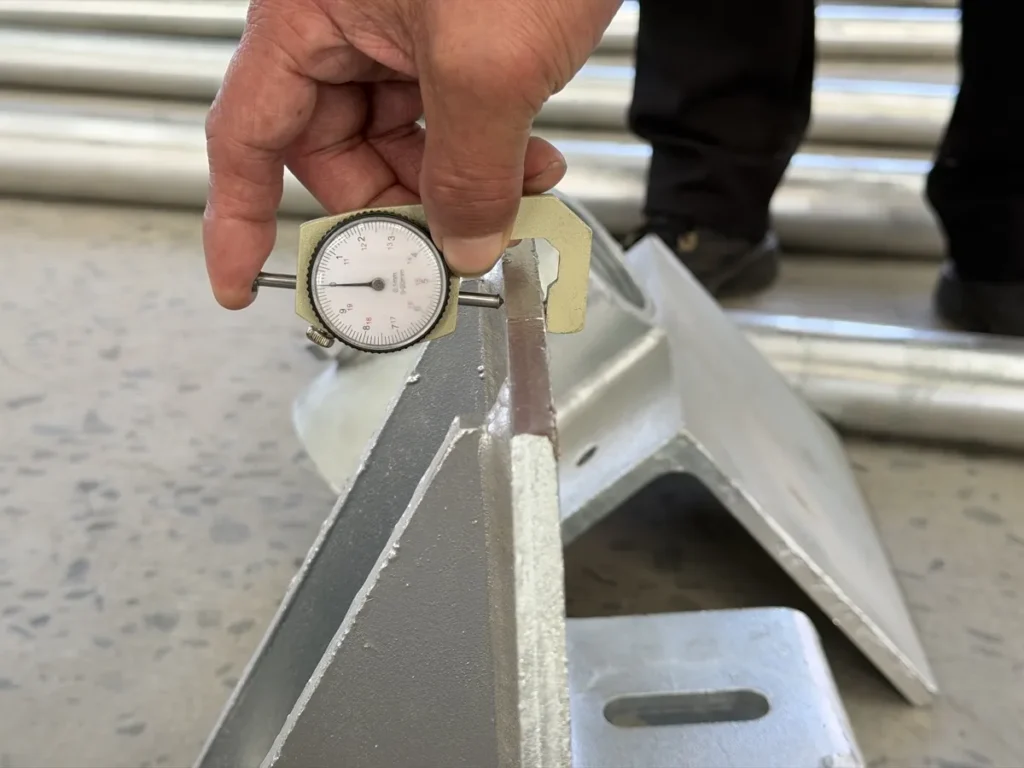
More installation torque is not always better. The shaft, helix, weld, head and tooling have finite resistance. Local buckling, torsional yielding, weld damage or coating damage can occur before a desired ground response is reached. Establish equipment and product limits through the approved engineering and manufacturing documents.
Inspect representative components before production and after difficult installations. Where extensions or couplers are used, include their torsional and structural behaviour. A pile that appears intact above ground may still have buried damage, so an abnormal installation log requires engineering review even when the final reading is high.
Create an auditable installation register
For each pile, record at minimum: location ID, product code and revision, batch or traceability reference, installation date, rig and operator, start and final levels, final depth, inclination, complete measured response, stop reason, observed anomaly and status. Link test piles and production verification results to their zones.
Any change from the approved rule should create a nonconformance or field query with an owner. The disposition needs the affected locations, evidence, engineering authority, required rework or additional test and closure status. This prevents verbal acceptance from becoming an invisible design change.
At handover, provide the approved method, calibration records, raw and reviewed logs, as-built survey, test reports, nonconformance register and final pile schedule. The buyer should be able to trace from a support on the layout back to its installed evidence.
Frequently asked questions
What installation torque guarantees a given capacity?
There is no universal value. Any relationship must be justified for the project’s pile geometry, ground, equipment, method and load direction, then verified by testing.
Can the final torque reading alone be recorded?
It is better to preserve the response with depth. The history helps identify transient obstructions, weak layers, reinstallation and other conditions a final number can hide.
Does a high reading mean the pile can be accepted at shallow depth?
Not automatically. The engineer must determine whether the response is sustained in an approved stratum and whether axial, lateral, structural, durability and movement checks are satisfied.
How often should production piles be tested?
Frequency depends on uncertainty, variability, consequences and correlation maturity. Define it in the test plan and include triggers for more testing when production data depart from the verified range.
Who approves an exception?
The project should name the geotechnical and structural design authority before installation begins. The installer or equipment operator should not be left to make an undocumented capacity decision.
Before defining installation or verification criteria, confirm that the site, loads, interfaces, responsibilities and acceptance basis are complete in the ground screw design input checklist.
Specify the data route, not only a target number
For a project review, send the ground model, loads, candidate pile geometry and proposed test method through the technical enquiry route. Use the Product Data Center to identify controlled product information needed for the trial plan.
Installation torque verification table
| Decision area | Inputs to confirm | Verification output |
|---|---|---|
| Measurement | Calibrated equipment, sampling frequency and installation depth | Traceable torque log by pile position |
| Correlation | Site-specific relationship between torque and capacity | Trial results; no universal conversion assumed |
| Acceptance | Minimum criteria, refusal rule and exception handling | Engineer-approved installation and test plan |
Use this table as an enquiry and review checklist. Project design, acceptance criteria and released records remain project-specific.
References, disclosure and change record
References and further verification
- ICC-ES AC358: Helical Systems and Devices
- FHWA GEC 5: Evaluation of Soil and Rock Properties
- East Baoyu Ground Screw Piles
Disclosure: East Baoyu manufactures and supplies products discussed on this website. Structured drafting tools may assist research and editing, but technical claims, project inputs and release decisions require human review.
Version 2.0: Rebuilt to separate torque, depth, test response and design capacity; added correlation workflow, field disposition tables, measurement controls, testing, structural limits, records, FAQs and CTA.
View the public Content Change Log · Corrections: info@baolaipipes.com