

Mining Steel Structures
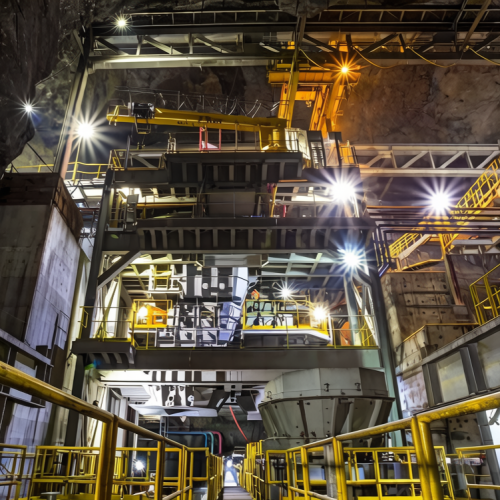
Purpose of this page. Mining steelwork can support conveyors, crushers, screens, transfer stations, platforms, chutes, access systems and other equipment exposed to dynamic loads and abrasive service. It explains the engineering and procurement route without treating a catalog example as an approved project model.
Application decision context
Equipment reactions, vibration, fatigue, impact, wear liners, material buildup, maintenance access and remote-site logistics can govern the design more strongly than the nominal gravity load. The equipment vendor and structural model must use consistent loads, coordinates and operating cases.
Required project inputs
- Equipment reactions, dynamic factors and operating combinations
- Material flow, abrasion, impact and buildup conditions
- Maintenance, replacement, guarding and access requirements
- Site exposure, coating and wash-down environment
- Module size, road limits, cranes, storage and erection plan
Configuration and interface route
Support frames and galleries are coordinated with conveyors, drives, chutes, guards, walkways and transfer points. Replaceable wear components need access and attachment details. Bolted module joints can reduce remote-site welding but require tolerance, alignment and erection planning.
Manufacturing and verification plan
The ITP may include material traceability, welding controls, NDT for specified joints, dimensional checks at equipment interfaces, trial assembly, coating inspection and hardware control. Dynamic or fatigue details require the acceptance rules stated in the design and fabrication specification.
Installation, logistics and site coordination
Remote projects benefit from module-based packing, clear piece marks, spare hardware and an installation sequence tied to the site lifting plan. Long storage periods require drainage, dunnage and preservation. Field changes are recorded against equipment and structural interfaces.
Design and supply boundaries
- Wear life and throughput are not universal website values
- Equipment performance remains with the equipment supplier
- Dynamic and fatigue checks require actual operating loads
- Site erection and commissioning scope must be stated in the contract
Documents to define before release
- Equipment load and interface register
- Approved fabrication and module drawings
- Material, welding and NDT records
- Equipment-interface dimensional report
- Coating and preservation records
- Packing, spare and installation-zone lists
The Product Data Center shows how this application connects to the product family and configuration route. Public catalogs support orientation only. The approved calculation, drawing, bill of material, quotation, ITP and contract define the supplied scope. Use the Evidence Center to request the records applicable to the actual order.
Stable information architecture
Open Product Data Center Product family → configuration → application → evidence
Configuration route
Primary members, Secondary and interface steel, Fabrication and protection route
Application pages
Buildings · Bridges · Power · Oil and gas · Mining · Stadiums and sports centres · Custom structures
Resources and evidence
Steel structures are released from approved drawings, calculations and bills of material rather than a universal website model number. The stable classification is application, structural family, fabrication route and evidence pack.