

Bridge Steel Structures
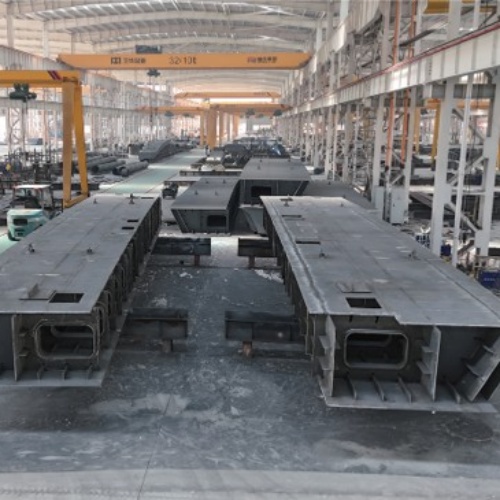
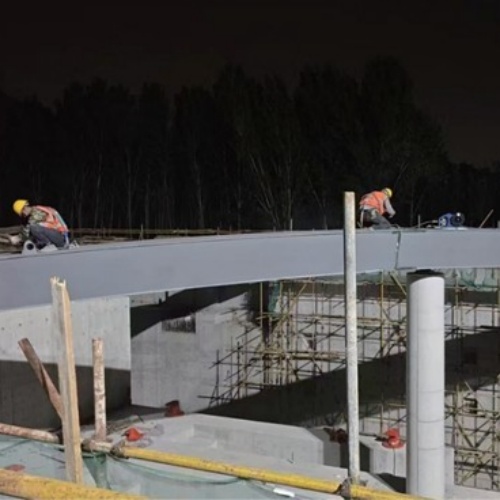
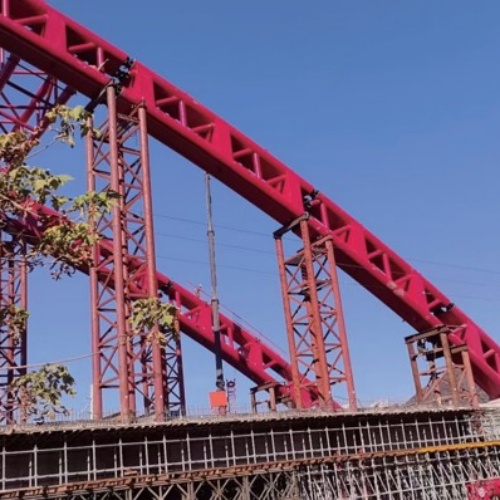
Purpose of this page. Bridge steelwork may include girders, cross-frames, diaphragms, bearings interfaces, stiffeners, walkways and ancillary components, each controlled by the bridge authority and project specification. It explains the engineering and procurement route without treating a catalog example as an approved project model.
Application decision context
Fatigue-sensitive details, geometry control, weld categories, fracture or toughness requirements, bolted field splices, camber and erection stages can govern the fabrication route. The project must identify the controlling bridge code, authority amendments and inspection hold points before material procurement.
Required project inputs
- Bridge design code, authority specification and drawing set
- Steel grade, toughness, through-thickness and traceability requirements
- Fatigue categories, weld details, NDT and acceptance criteria
- Camber, sweep, trial assembly and survey-control requirements
- Transport envelope, lifting plan, temporary works and erection sequence
Configuration and interface route
Plate girders, box sections, trusses or secondary assemblies require different cutting, forming, welding and distortion-control plans. Shop splice and field splice locations must match transport and erection constraints. Bearing, deck and barrier interfaces need survey and tolerance references that remain consistent from shop drawing to site.
Manufacturing and verification plan
A bridge ITP can include material identification, consumable control, WPS qualification, welder authorization, fit-up, preheat and interpass records, NDT, dimensional survey, trial fit and coating inspection. The applicable frequency and witness points come from the contract and approved ITP—not a generic website claim.
Installation, logistics and site coordination
Transport planning reviews component length, width, weight, centre of gravity, lifting points and protection of machined or coated interfaces. Marking must survive storage and multiple lifts. Field fit problems are handled through the approved survey, non-conformance and engineering-change route.
Design and supply boundaries
- Project identity does not prove East Baoyu supply scope
- Fatigue and weld acceptance are specification-specific
- Trial assembly is performed only where required
- Coating type and durability follow the exposure and owner requirements
Documents to define before release
- Approved bridge fabrication drawings
- Material and toughness certificates
- WPS, welder and consumable control records
- NDT and dimensional survey reports
- Trial-fit record where specified
- Coating, packing and release documentation
The Product Data Center shows how this application connects to the product family and configuration route. Public catalogs support orientation only. The approved calculation, drawing, bill of material, quotation, ITP and contract define the supplied scope. Use the Evidence Center to request the records applicable to the actual order.
Stable information architecture
Open Product Data Center Product family → configuration → application → evidence
Configuration route
Primary members, Secondary and interface steel, Fabrication and protection route
Application pages
Buildings · Bridges · Power · Oil and gas · Mining · Stadiums and sports centres · Custom structures
Resources and evidence
Steel structures are released from approved drawings, calculations and bills of material rather than a universal website model number. The stable classification is application, structural family, fabrication route and evidence pack.