

Customized Structures
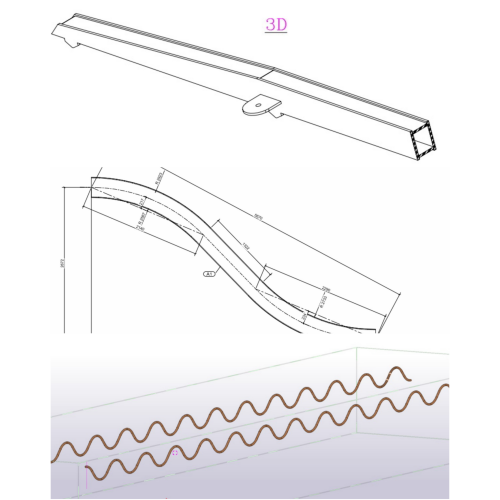
Purpose of this page. A custom request may involve a unique frame, machine support, platform, bracket, module or interface that does not fit a standard building, bridge or energy category. It explains the engineering and procurement route without treating a catalog example as an approved project model.
Application decision context
The first task is to define who owns the design and which inputs are approved. A sketch can start a feasibility review, but material purchase and fabrication need controlled geometry, loads, interfaces, tolerances, standards, coating and acceptance criteria.
Required project inputs
- Functional description, arrangement and design responsibility
- Loads, combinations, movements and failure consequences
- Interface coordinates, tolerances and connection requirements
- Material, welding, finish and environmental conditions
- Prototype, inspection, witness and documentation requirements
Configuration and interface route
The product is broken into primary load paths, interfaces, replaceable items and fabrication assemblies. Standard sections and repeatable details are preferred where they meet the design, but non-standard plates, machining, forming or fixtures are controlled through drawings and inspection points.
Manufacturing and verification plan
A risk-based ITP identifies critical dimensions, materials, welds, fits, finishes and functional checks. A prototype or first-article inspection may be appropriate before volume production. Deviations are recorded and approved by the stated design authority.
Installation, logistics and site coordination
Packing and lifting follow the assembly sequence, centre of gravity and protected interfaces. Installation instructions identify temporary stability, bolt tightening, field welds, adjustment and inspection access. Site conditions may require a controlled redesign rather than field adaptation.
Design and supply boundaries
- Feasibility feedback is not an approved design
- Prototype performance does not replace production acceptance
- Intellectual-property and confidentiality routes must be agreed
- Commercial scope must state design, fabrication and site responsibilities
Documents to define before release
- Approved functional and design input record
- Fabrication drawings and bill of material
- Material and process qualification records
- First-article or dimensional inspection report
- Coating, packing and installation information
- Deviation and final release records
The Product Data Center shows how this application connects to the product family and configuration route. Public catalogs support orientation only. The approved calculation, drawing, bill of material, quotation, ITP and contract define the supplied scope. Use the Evidence Center to request the records applicable to the actual order.
Stable information architecture
Open Product Data Center Product family → configuration → application → evidence
Configuration route
Primary members, Secondary and interface steel, Fabrication and protection route
Application pages
Buildings · Bridges · Power · Oil and gas · Mining · Stadiums and sports centres · Custom structures
Resources and evidence
Steel structures are released from approved drawings, calculations and bills of material rather than a universal website model number. The stable classification is application, structural family, fabrication route and evidence pack.