

Oil & Gas Structures
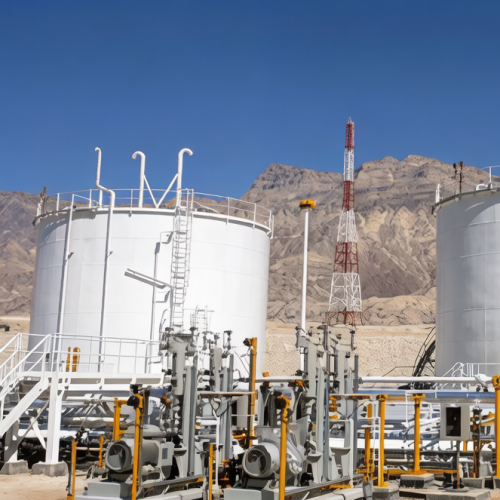
Purpose of this page. Oil and gas steelwork can include pipe racks, equipment supports, platforms, modules, stairs, handrails and maintenance structures integrated with process and safety systems. It explains the engineering and procurement route without treating a catalog example as an approved project model.
Application decision context
Process equipment, piping loads, thermal movement, hazardous-area requirements, fireproofing, escape routes, dropped-object controls and corrosion exposure can change member and connection details. The structural, piping, mechanical and site models need a managed interface before fabrication release.
Required project inputs
- Project design basis, model, piping and equipment reactions
- Hazardous-area, fireproofing and emergency-access requirements
- Material grade, toughness, welding and NDT specification
- Atmospheric, marine or chemical exposure and coating system
- Module boundaries, transport, lifting, preservation and site sequence
Configuration and interface route
Pipe-rack frames and modules are split around transport envelopes, lifting points and site tie-ins. Equipment and pipe supports need load, movement and tolerance data. Grating, handrails, stairs, toe plates and maintenance clearances are coordinated with piping and electrical penetrations.
Manufacturing and verification plan
The manufacturing route follows the approved material, welding, NDT, dimensional and coating requirements. Hold points may include material release, fit-up, critical welds, module survey, coating preparation, dry-film thickness and dossier review. Applicability is defined by the project specification.
Installation, logistics and site coordination
Modules and loose steel need preservation, lifting identification, tie-in marks and a controlled loose-item register. Packing should protect coated edges, machined faces and bolting. Site welds, coating repair and alignment checks follow the approved installation and inspection procedures.
Design and supply boundaries
- No pressure-containing scope is implied
- Hazardous-area compliance is project and equipment specific
- Fireproofing and passive protection require separate specifications
- Fabrication does not imply process or piping design responsibility
Documents to define before release
- Approved multidisciplinary model and interface drawings
- Material, WPS, welder and NDT records
- Dimensional survey and module release report
- Coating and preservation records
- Lifting, packing and loose-item register
- Project manufacturing dossier
The Product Data Center shows how this application connects to the product family and configuration route. Public catalogs support orientation only. The approved calculation, drawing, bill of material, quotation, ITP and contract define the supplied scope. Use the Evidence Center to request the records applicable to the actual order.
Stable information architecture
Open Product Data Center Product family → configuration → application → evidence
Configuration route
Primary members, Secondary and interface steel, Fabrication and protection route
Application pages
Buildings · Bridges · Power · Oil and gas · Mining · Stadiums and sports centres · Custom structures
Resources and evidence
Steel structures are released from approved drawings, calculations and bills of material rather than a universal website model number. The stable classification is application, structural family, fabrication route and evidence pack.