

Power Steel Structures
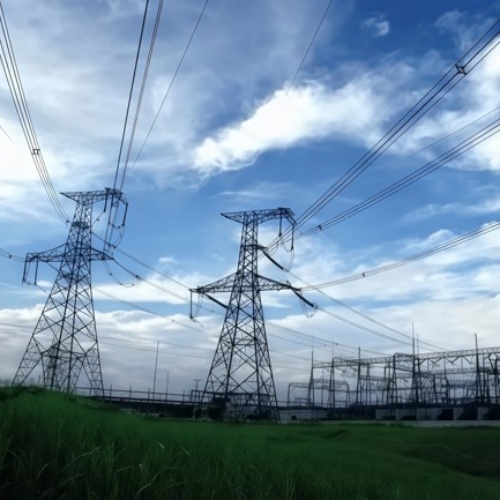
Purpose of this page. Power-sector steel can support substations, transmission equipment, cable systems, access platforms, plant, renewable-energy equipment and other owner-defined interfaces. It explains the engineering and procurement route without treating a catalog example as an approved project model.
Application decision context
Electrical clearances, equipment reactions, conductor or cable loads, seismic requirements, earthing interfaces, maintainability and outage constraints must be translated into controlled steel drawings. Similar-looking supports may carry different equipment or connection demands and need location-based identification.
Required project inputs
- Owner specification, equipment layouts and interface loads
- Electrical clearance, earthing and access requirements
- Wind, ice, seismic, thermal and operating load combinations
- Steel grade, fasteners, galvanizing or coating requirements
- Site sequence, outage window, lifting and document handover plan
Configuration and interface route
Support frames, gantries, equipment stands, platforms and secondary steel are coordinated with foundations, anchor templates, cable routes and equipment vendor drawings. Hole patterns, slotted adjustments, bolted splices and earthing points require a single approved interface register.
Manufacturing and verification plan
Traceability links members and fasteners to material records and drawing locations. The project ITP may control welding, dimensions, hole position, trial fit, galvanizing thickness, coating repair, identification and final document review. Batch definitions and sample frequencies must be stated in the approved plan.
Installation, logistics and site coordination
Packing by substation bay, line section or equipment area reduces site sorting. Hardware counts, marks and drawings need consistent references. Galvanized surfaces and threaded connections require protection in transport, storage and erection; field modification follows the owner change process.
Design and supply boundaries
- No voltage class or equipment compatibility is assumed
- Owner and equipment-vendor interfaces control the final design
- Galvanizing does not remove the need for exposure and detailing review
- Public project names do not prove participating entity or quantities
Documents to define before release
- Approved equipment and civil interface schedule
- Fabrication drawings and member mark list
- Material and fastener certificates
- Welding, dimensional and galvanizing records
- Packing list by installation area
- Owner-required manufacturing data record
The Product Data Center shows how this application connects to the product family and configuration route. Public catalogs support orientation only. The approved calculation, drawing, bill of material, quotation, ITP and contract define the supplied scope. Use the Evidence Center to request the records applicable to the actual order.
Stable information architecture
Open Product Data Center Product family → configuration → application → evidence
Configuration route
Primary members, Secondary and interface steel, Fabrication and protection route
Application pages
Buildings · Bridges · Power · Oil and gas · Mining · Stadiums and sports centres · Custom structures
Resources and evidence
Steel structures are released from approved drawings, calculations and bills of material rather than a universal website model number. The stable classification is application, structural family, fabrication route and evidence pack.