

What the public record supports
Location, year, current site media and technical context are present in the company-managed record. Customer identity, contract tier, quantities, measured outcomes and acceptance documents are not public.
- Classification
- Application reference (internal record)
- Location / year
- Tianjin, China · 2026
- Entity / role
- Customer, contracting entity and contract tier are not public.
- Quantities / results
- Capacity, quantity, tonnage, schedule and measured results are not public.
- Record reviewed
- 2026-07-17
Disclosure limit: Use as an internal application reference and engineering-planning example. Request the authorized role and scope record before qualification use.
How East Baoyu classifies and verifies evidencePublic Record and Evidence Boundary
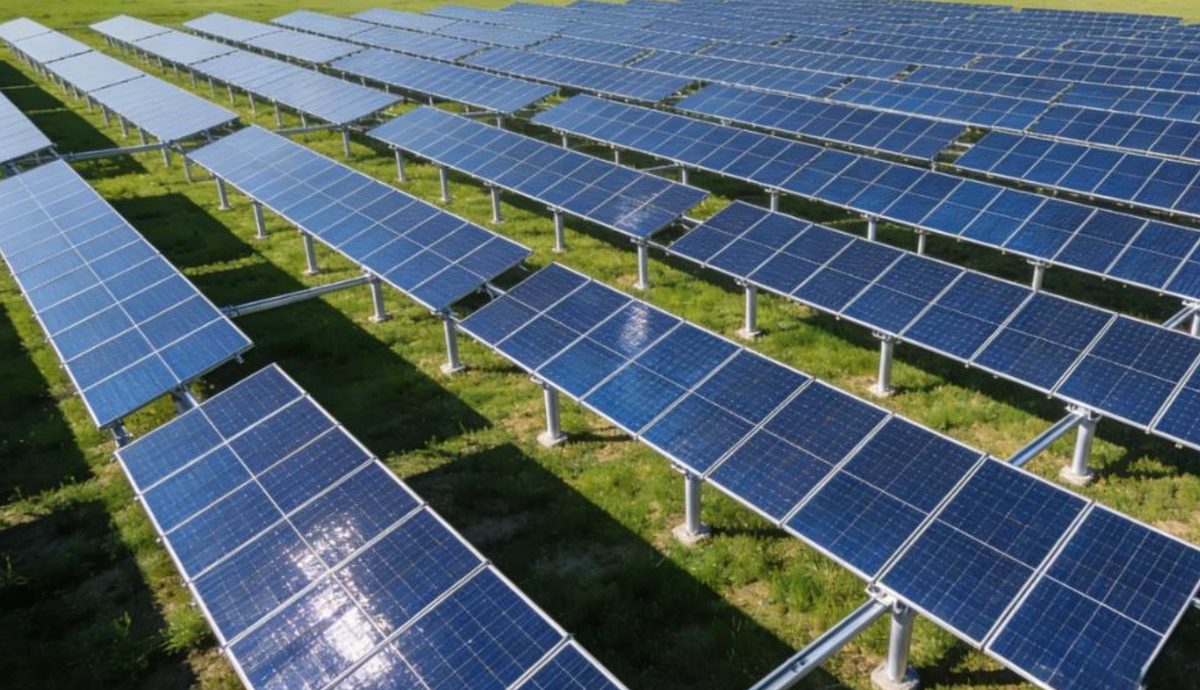
The company-managed record identifies this as a ground-mounted solar application reference in Tianjin, China, dated 2026. The current public material includes the project title, location, year, image and an engineering context relevant to screw foundations and mounting steel. It does not identify the customer, contract tier, installed MW, pile quantity, supplied tonnage, test results, programme or acceptance documents. Those items must be confirmed from authorized project records before this page is used for qualification.
Project Decision Context
A ground solar package must convert a site layout and structural reactions into repeatable foundations, posts, beams, rails and connection details. The main decision is not simply whether a standard screw can be installed. The project team must determine whether the soil profile, groundwater, obstructions, corrosion exposure, access and construction tolerances support the selected foundation route across all array zones.
For a comparable project, the first controlled input set should include the module and table layout, wind and snow basis, tracker or fixed-rack reactions, geotechnical information, survey levels, design life, coating requirements and installation sequence. Changes to row length, table height or terrain zones can alter foundation reactions and member schedules.
Foundation and Mounting Interface
Pile shaft, helix, length, wall thickness, extensions and head connection are design outputs. The pile head must match the supported structure without creating impractical bolt access, adjustment or erection tolerances. A site may require more than one pile schedule where soil layers or structural reactions vary. Refusal, unexpected obstructions and installation deviations need an approved exception process rather than an unrecorded field change.
Installation torque can be recorded as a construction control only where the project engineer has approved its use and established an appropriate site relationship. It is not a universal substitute for proof or production testing. Acceptance should identify test locations, load stages, hold periods, movement limits, sampling frequency and the authority that releases production installation.
Manufacturing and Documentation Route
The manufacturing release should connect each component to the approved drawing revision and bill of materials. A practical documentation schedule may include material certificates, dimensional inspection, coating or galvanizing records, weld records where applicable, packing lists and batch identification. The ITP defines which characteristics are checked routinely, by sample, at a witness point or by an independent party.
Packaging by array block or installation sequence can reduce site sorting. Labels should remain readable through transport and outdoor storage, while small hardware needs a controlled count and package reference. The delivery plan should also identify any long items, lifting constraints and protection required for coated surfaces.
Public Outcome Statement
This page supports a planning reference for coordinating foundations, mounting steel, quality records and installation inputs. It does not publish a measured performance, cost, installation-speed or schedule result. Any such result must state the baseline, measurement method, conditions and source before publication.
Information for a Comparable Review
- Site location, survey, layout and module data
- Foundation reactions and applicable design standard
- Geotechnical profile, groundwater and known obstructions
- Design life, corrosion exposure and coating specification
- Pile-head and mounting-system interface drawings
- Test plan, required documents, quantities and delivery sequence
Send the available inputs to request a project-specific pile and mounting data sheet. Missing information will be listed before a production proposal is treated as final.